5 real examples of how embedded lending helps small businesses
Team Parafin
A bounce house company in Florida. A limousine company paying down fleet debt. A medical scrubs retailer stocking inventory ahead of nursing school graduation season.
On paper, these businesses couldn't be more different. They span industries, business sizes, and financing needs.
Yet all of them accessed capital through the software they already use to run their businesses.
That's the promise of embedded lending. Instead of asking small businesses to fit into a generic underwriting model, platforms can offer financing built around how their specific industry actually operates. The result is capital that reaches businesses traditional lending often misses, delivered at the moment it's needed most.
What is embedded lending, and why does it work for platforms?
Embedded lending is capital offered to small businesses inside the software they already use to run their operations, not through a traditional bank application.
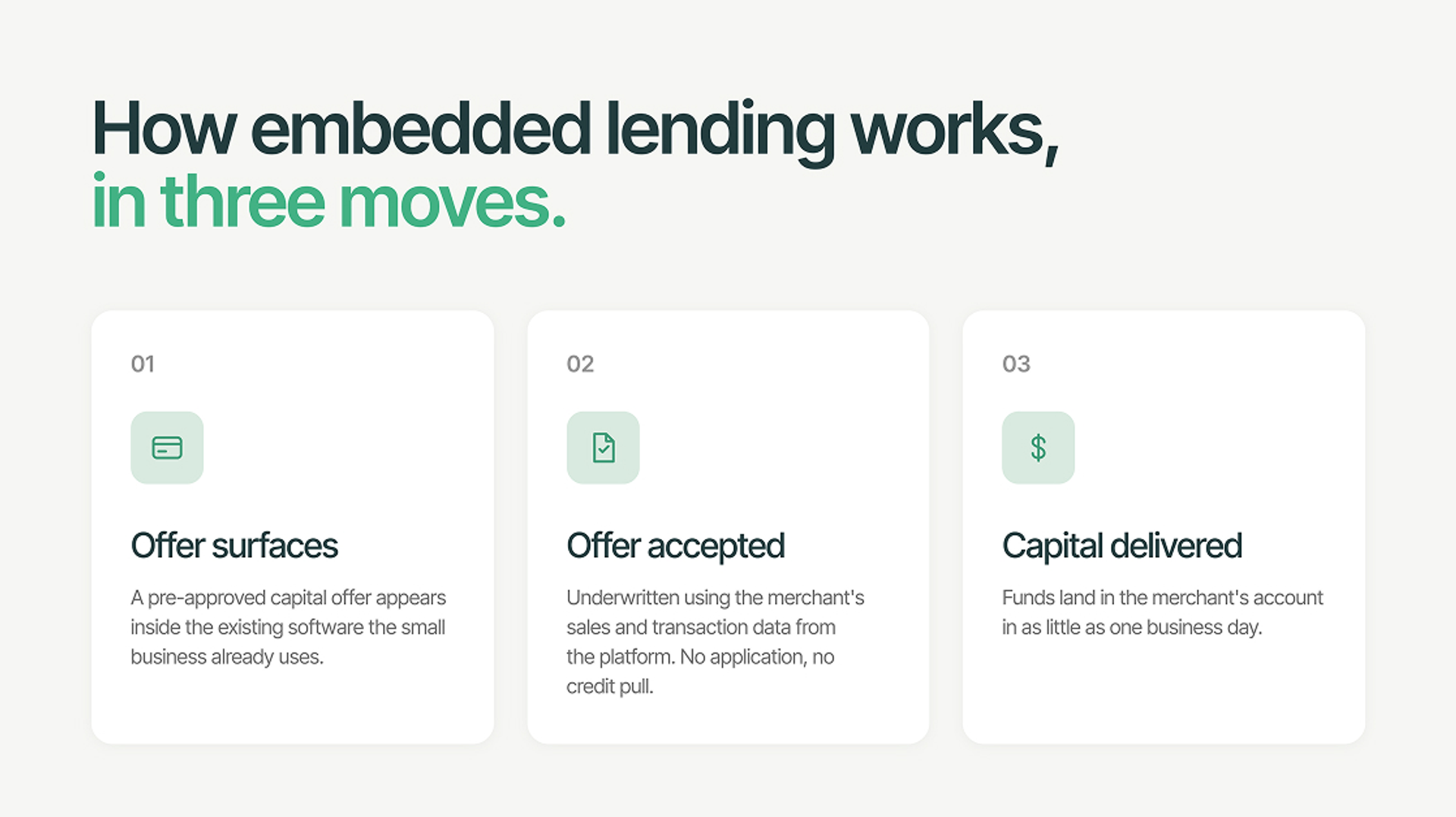
It works because platforms already have what banks spend weeks trying to get: a clear picture of how each business is actually doing. That data drives the underwriting, so decisions are faster. Payment is automatic, so merchants never manage a separate loan payment on top of running their business.
For platforms, this creates a few structural advantages over traditional lending:
- Underwriting is efficient because the platform already has what a bank would spend weeks and money assembling
- The offer is sized to what the business can actually handle, not what a bank scorecard says it should be
That's why embedded lending works for a solo acupuncturist and a bounce house company alike. And it's why embedded lending reaches businesses that traditional lending often misses.
Curious how this works in practice? Parafin powers embedded lending for platforms like DoorDash, Amazon, and Mindbody. See how it works →
Embedded lending examples, by business type
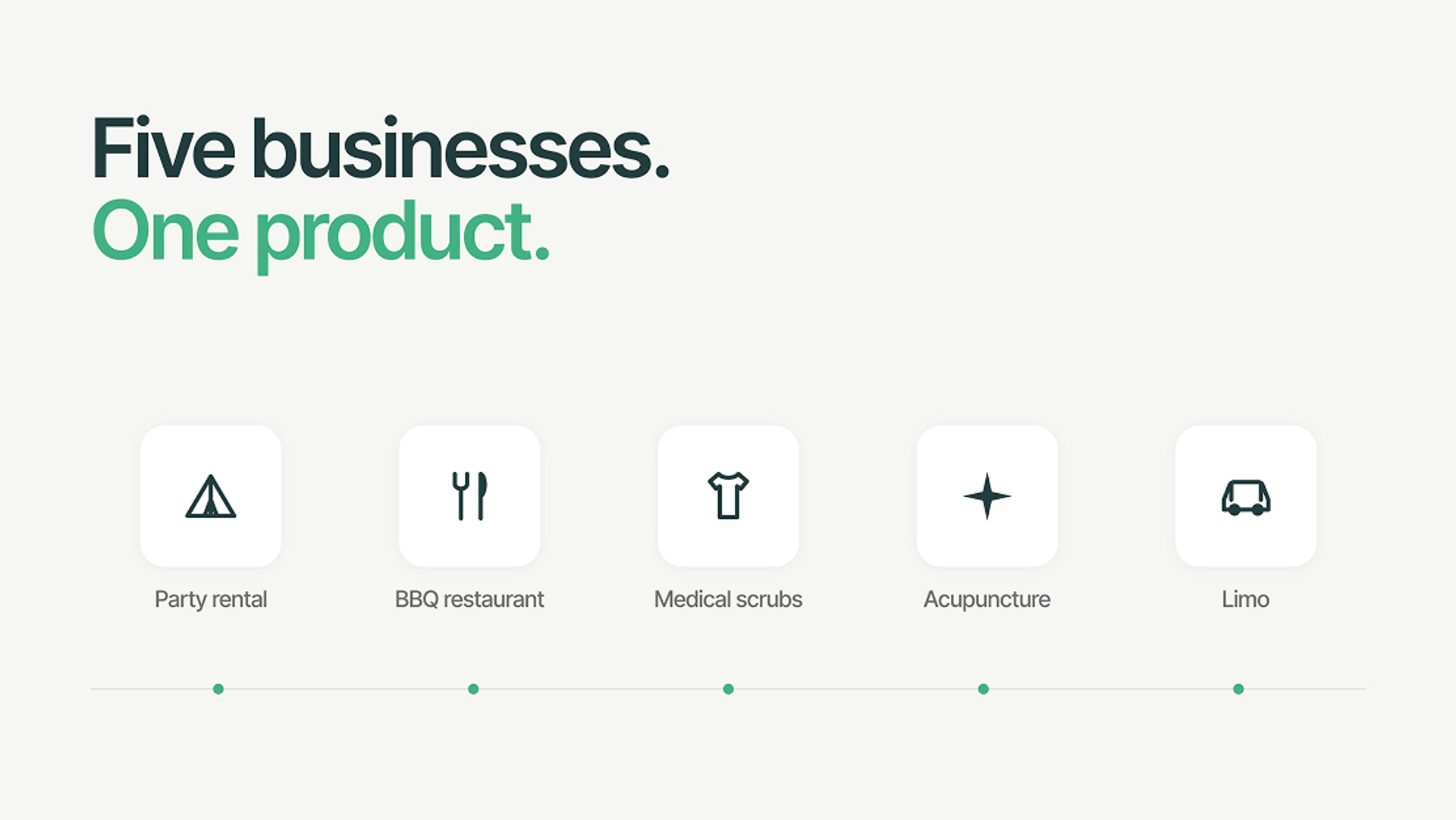
1. A party rental company on its 12th advance
A party rental company in Florida rents out bounce houses and event equipment. They took their 12th cash advance through the software they use to manage bookings.
With seasonality in mind, party rentals can be a brutal business to run. Summer and graduation season pay the bills, but winter often doesn't. If the business has a loan with a fixed monthly payment due in January, when nobody is booking bounce houses, that's a significant challenge. Here, payment comes out of future bookings automatically, so slow months cost less. Busy months cost more, but by then the business can afford it.
Twelve times. That's not a business that needed a one-time lifeline. That's a business that has figured out how to use capital as a regular part of how it runs.
2. A Pacific Islander BBQ restaurant that doubled its offer in three months
A Pacific Islander BBQ restaurant in the Las Vegas area took its first advance through the software it uses to run operations, and came back three months later to take a second one.
That progression is what makes this story worth telling. Most first-time borrowers start small and work their way up gradually, building payment history before a lender is willing to increase their offer. This restaurant skipped that ramp because the platform didn't need to guess about performance, it already had the data. The business took the capital, ran a full payment cycle, and the next offer went up because the business's performance did.
Restaurants are a common example in embedded lending stories, but those stories are usually about convenience: no paperwork, fast approval, funds the next day. What this one illustrates is something different. When an offer doubles in a single payment cycle, it's because the underwriting is reading real performance in real time, not waiting for a borrower to manually prove themselves through a new application. The offer grew because the business earned it, and the platform could see that without being told.
3. A medical scrubs shop that stocks inventory ahead of its busy season
Healthcare apparel has more seasonality than it looks from the outside. Nursing school graduations, hospital hiring cycles, and back-to-school for healthcare programs cluster demand into a few predictable peaks. The inventory has to be bought before those peaks arrive, which means the cash to stock up is needed exactly when the prior slow season has drained it.
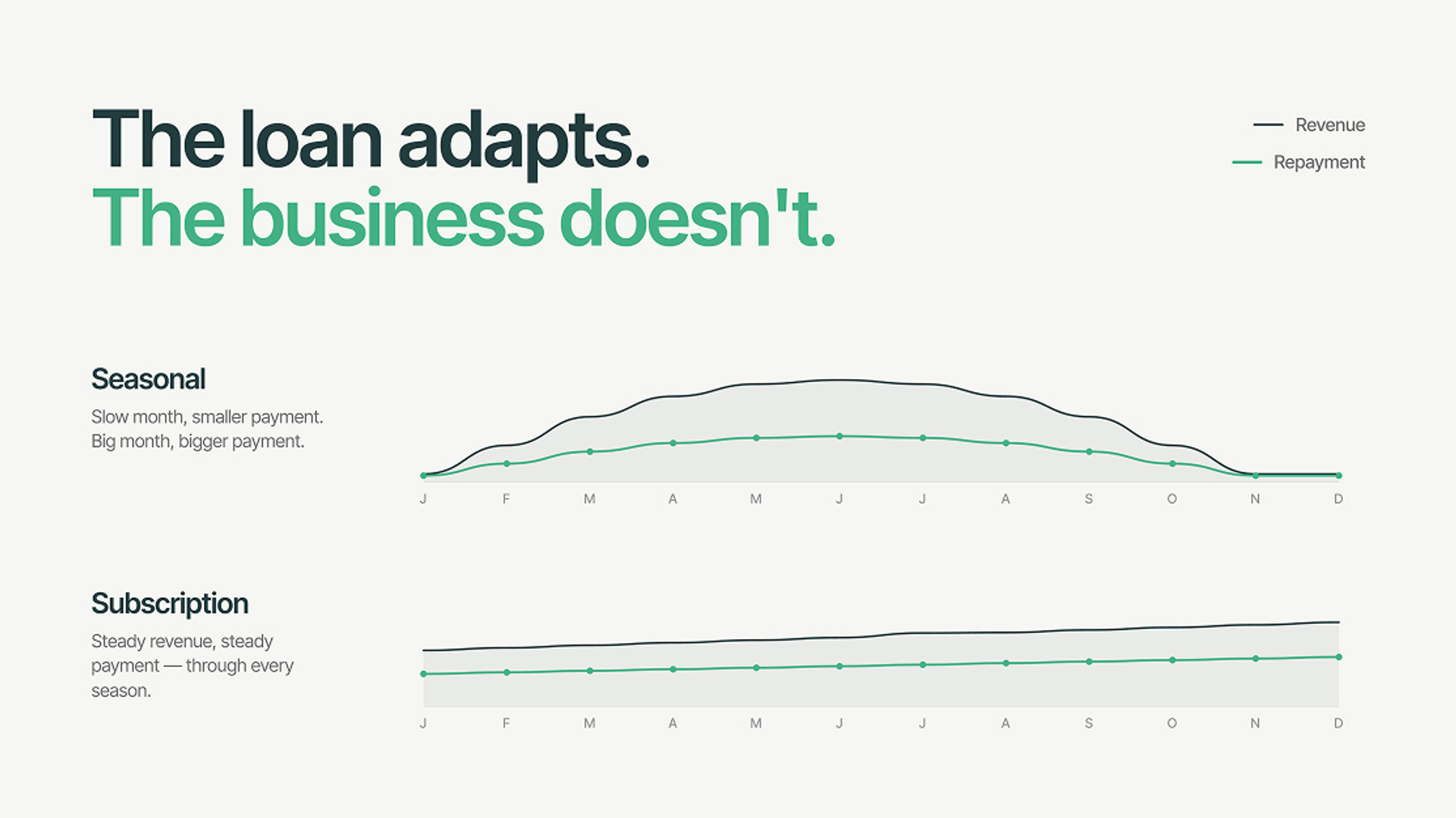
A medical uniform retail owner in Birmingham uses capital through the platform she runs her store on to solve that timing problem. She stocks inventory ahead of the busy stretches and maintains a float through the slow months, and it covers payroll when things get tight. Because payment comes out of her daily sales automatically, the slow months cost less and the busy months carry more of the load.
That alignment between when money goes out and when it comes in is the whole point. As she put it: "What I love most is the convenience: payment is taken out automatically, so I never have to worry about remembering a monthly payment." For someone running a business on her own, not having to manage a separate loan payment on top of everything else is a huge benefit.
4. A solo acupuncturist who needs less than $10K
A solo acupuncture practitioner in Los Angeles has taken 11 advances through the practice management software he uses to book patients. Each one small. The most recent: $6,400.
It works at this scale because underwriting costs a fraction of what it would at a bank, where a human would have to review and process the application manually. The platform already has the data: appointment volume, booking patterns, revenue flowing through the scheduling software. Payment comes out of future booked sessions automatically. And because each advance is small and payment is fast, the offer keeps coming back.
Eleven advances from a solo practitioner isn't a business in crisis. It's someone who has figured out that a few thousand dollars, available when he needs it and repaid before he notices it, fits the rhythm of how he runs his practice.
5. A limo company that used capital to pay down its own debt
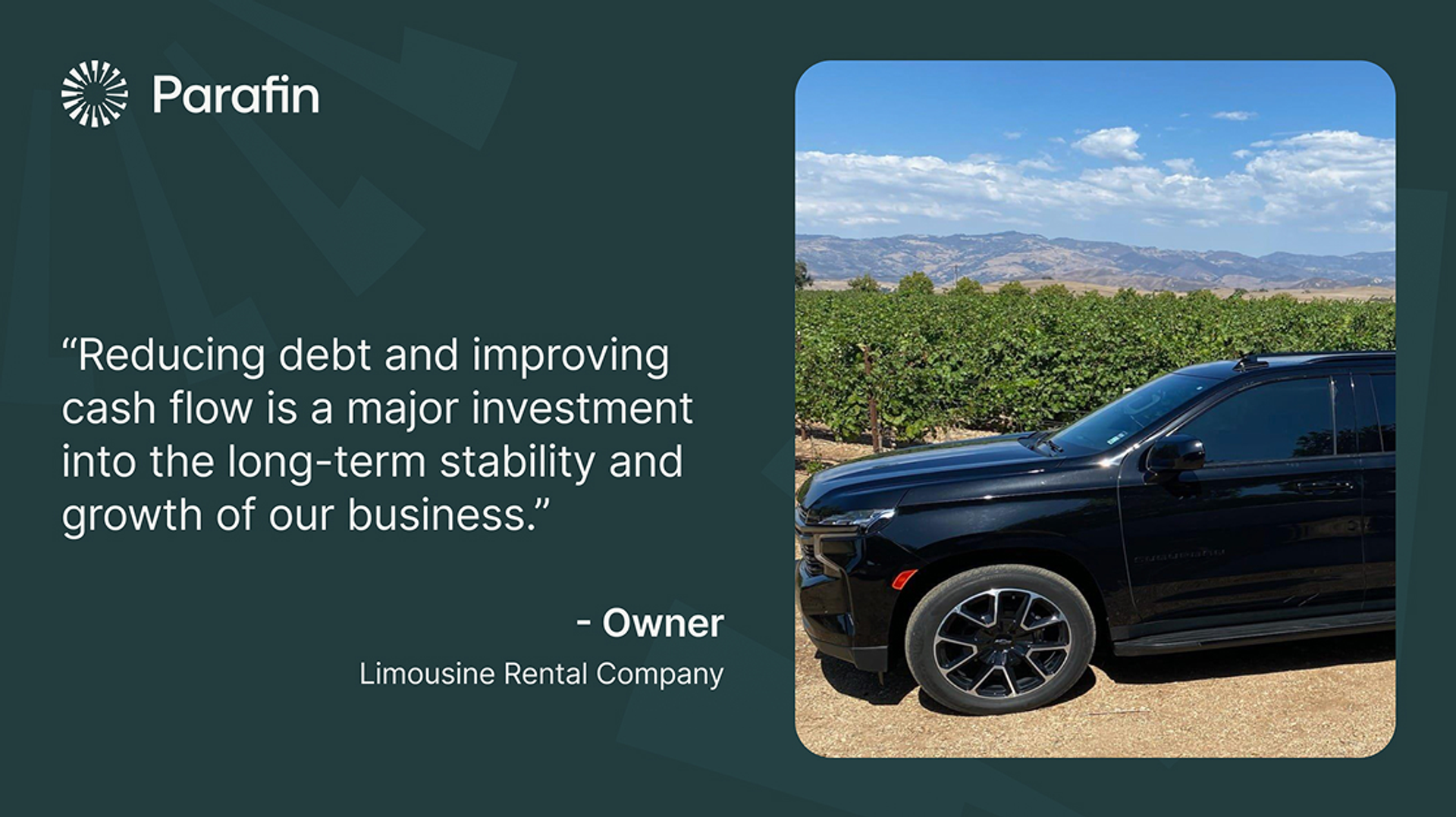
A limousine and transportation company in Santa Barbara took its third advance of $27,000 through the dispatch software it uses to manage fleet operations, and used it to pay down debt on the fleet itself.
Vehicles and insurance are the largest fixed costs in the limo business. Reducing the principal on a fleet loan lowers the monthly payment and frees up cash flow for everything else the business needs to run. It is the kind of financial move that a larger company with a finance team would make without much deliberation, using more flexible capital to retire more expensive, rigid debt.
The owner described their reasoning in straightforward terms: "The single biggest factor in our decision is financial freedom. In the limousine industry, vehicle payments and insurance are among the largest ongoing expenses, and reducing debt and improving cash flow is a major investment into the long-term stability and growth of our business."
His third advance was nearly three times his first. The strategy was the same each time, and each time the platform extended more capital because the business performance earned it.
What do these stories mean for your platform
Each of these businesses found a capital partner in the software they were already using. Not a bank they had to seek out, not a lender they had to convince. The platform already knew how they operated, and that made all the difference.
For platforms, that's the opportunity. Your merchants are already running their businesses through your software. You already have the data, the relationships, and the trust. Embedded lending lets you put all of it to work and be the partner that shows up for your merchants when it matters most.
If you're a platform considering capital for your merchants, we'd love to show you what's possible.